


From the Sanctuary to the World: How Black Gospel Music Became the Soundtrack of a People

From Thomas A. Dorsey and Mahalia Jackson to Detroit’s legendary gospel families, Marvin Sapp and Kirk Franklin, generations of African American artists have transformed personal experiences into music that transcends cultural and geographical boundaries.
When I sat down with Bishop Marvin Sapp at Lighthouse Full Life Center in Grand Rapids in November 2026, one of the things I wanted to understand was where his music came from. During our conversation, he recalled returning to the pulpit the Sunday after burying his father and singing what would eventually become “Never Would Have Made It.” What began as a deeply personal expression of faith would become a song that resonated with people throughout the world. His experience reminded me of another gospel artist who, generations earlier, had also transformed personal tragedy into music.
In 1932, Thomas A. Dorsey lost his wife and infant son, an experience that led to the creation of “Precious Lord, Take My Hand.” Separated by decades, the experiences of Dorsey and Sapp reflect a remarkable continuity within African American gospel music. Both men found a way to express their grief through music, creating something that would eventually provide comfort to others. Their stories offer a glimpse into why gospel music occupies such a significant place in African American history.
The Music That Sustained a People
Long before gospel music became a commercially successful genre, African Americans relied upon music as a means of preserving cultural traditions, expressing their faith and navigating the realities of enslavement. Spirituals incorporated African musical traditions, biblical themes and the experiences of people whose freedoms had been systematically denied. Through collective singing, generations of African Americans found opportunities to express emotions and aspirations that were not always safe or possible to communicate openly. These musical traditions would eventually provide a foundation for the development of modern gospel music.
Following emancipation, African American churches became important centers of religious worship, education, community organizing and social support. During the Great Migration, families relocating from the South to northern cities brought their musical and religious traditions with them. Communities in Chicago, Detroit and other metropolitan areas established congregations that provided familiarity and fellowship amid considerable social and economic change. Within these churches, African American sacred music continued to evolve.
Thomas A. Dorsey and the Birth of Modern Gospel
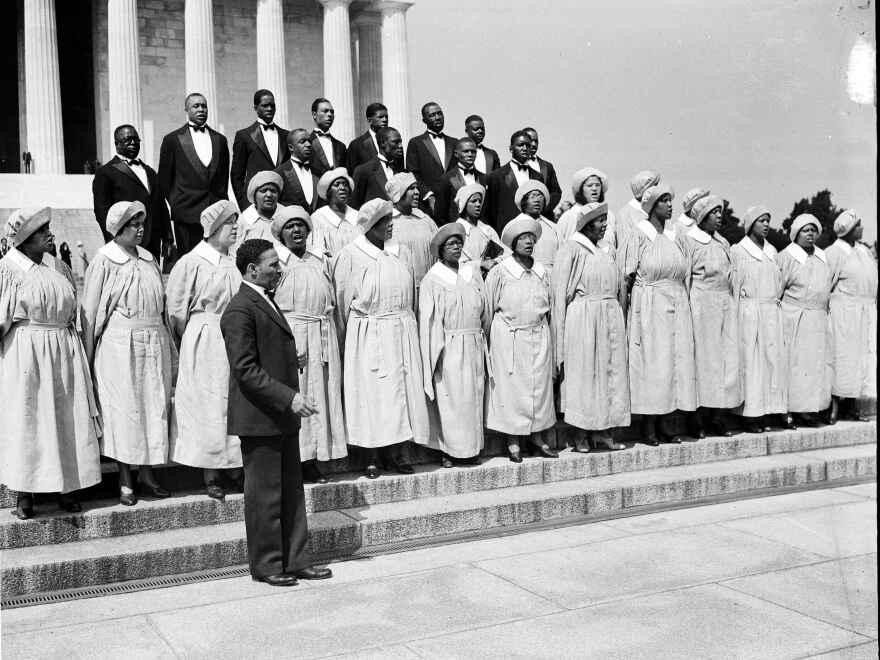
Widely recognized as the Father of Gospel Music, Thomas Andrew Dorsey was born in Georgia in 1899 and developed his musical talents performing blues and jazz. Before dedicating his career to religious music, Dorsey performed under the professional name Georgia Tom. His background in secular music influenced his approach to sacred compositions, introducing musical elements that differed from the traditional hymns familiar to many congregations. His innovations, however, were not immediately embraced by the religious establishment.
Dorsey encountered resistance from church leaders who questioned the incorporation of blues and jazz into worship. Nevertheless, he continued developing his musical style, eventually working with artists such as Sallie Martin and Mahalia Jackson to introduce gospel music to broader audiences. Following the devastating loss of his wife and child in 1932, he drew upon his grief to create “Precious Lord, Take My Hand.” The composition became one of his most enduring contributions to American music.
Through the establishment and growth of the National Convention of Gospel Choirs and Choruses, Dorsey helped create opportunities for gospel performers, composers and choir directors to share their talents. His work contributed to the development of a musical industry that would eventually extend beyond the sanctuary. It also established a foundation upon which future artists could build, experiment and introduce sacred music to new generations. Nearly a century later, the influence of his musical innovations remains evident in contemporary gospel.
Mahalia Jackson: A Voice for Faith and Freedom

Born in New Orleans, Mahalia Jackson developed her musical foundation within the traditions of the African American church. After moving to Chicago, she became associated with Dorsey and other gospel pioneers who were working to expand the genre’s reach. Her powerful vocals and emotionally expressive performances helped introduce gospel music to increasingly diverse audiences. Her breakthrough recording, “Move On Up a Little Higher,” became a significant milestone in the commercial development of gospel music.
While her accomplishments as a recording artist earned her international recognition, Jackson’s contributions extended beyond the entertainment industry. She became a supporter of the Civil Rights Movement and developed a friendship with the Rev. Dr. Martin Luther King Jr. In August 1963, she performed at the March on Washington for Jobs and Freedom, where thousands gathered to demand racial equality. Her participation reflected the longstanding relationship between the African American church, music and the struggle for civil rights.

For many participants in the movement, religious music and freedom songs provided encouragement during organizing efforts and demonstrations. Familiar melodies were sometimes adapted to reflect the movement’s objectives, connecting spiritual traditions with demands for social change. Music became a means of maintaining solidarity and expressing determination in the face of resistance. Jackson’s contributions helped demonstrate that a gospel singer’s influence could extend far beyond the walls of a church.
Detroit’s Place in Gospel Music History

When people discuss Detroit’s contributions to American music, Motown is often among the first things that come to mind. However, long before many of its recording artists achieved international success, African American churches throughout the city were developing extraordinary musical talent. Church choirs provided opportunities for young people to refine their voices, learn musical arrangements and perform before audiences. These experiences helped shape Detroit’s distinctive musical identity.
Among the city’s most influential gospel figures was Dr. Mattie Moss Clark, whose work as a choir director, musician and educator helped shape gospel music. Following her relocation to Detroit, Clark became a prominent figure within the Church of God in Christ, developing choir arrangements and training singers. Her musical influence extended beyond the congregations she served and into her own family. Her daughters would become internationally recognized as the Clark Sisters.
Known for their intricate harmonies, vocal versatility and innovative arrangements, the Clark Sisters introduced generations of listeners to a distinctive approach to contemporary gospel music. Their ability to incorporate elements of other musical genres helped expand the possibilities of sacred music without abandoning its spiritual foundation. Alongside Detroit gospel artists such as the Winans and Commissioned, they contributed to a musical movement that appealed to listeners across generations. Their accomplishments helped establish Michigan as an important contributor to the evolution of contemporary gospel.
Commissioned, Mentorship and Marvin Sapp

During my conversation with Bishop Marvin Sapp, I was particularly interested in what he learned during his years with Commissioned. He spoke about observing the more experienced members of the group and learning from them as musicians, businessmen, husbands and fathers. He also described purchasing books and studying the music industry, recognizing that developing his talent required an understanding of the business surrounding it. His reflections illustrated the importance of mentorship in preparing the next generation of artists.
For Sapp, the lessons learned during those years would eventually inform a successful solo career and his work in ministry. In 2003, he and his late wife, Dr. MaLinda P. Sapp, established Lighthouse Full Life Center in Grand Rapids, beginning with a congregation of 24 people. As he reflected upon his years there, he spoke about relationships that extended beyond Sunday morning worship and families whose lives he had watched change over time. His experiences offered insight into the connection between the music, the ministry and the communities that sustained both.
Our conversation also reminded me that the success of an artist cannot always be measured by record sales, awards or the number of people attending a concert. Sometimes, the significance of a song is found in the experiences of the people who turn to it during their most difficult moments. What Dorsey accomplished through “Precious Lord, Take My Hand,” Sapp continued through songs such as “Never Would Have Made It.” Their music demonstrates how a deeply personal experience can become meaningful to people the artist may never meet.
Kirk Franklin and the Evolution of Contemporary Gospel

The evolution of gospel music has continued through artists such as Kirk Franklin, whose work incorporates elements of R&B, hip-hop and other contemporary musical traditions. Franklin has introduced sacred music to audiences who may not have grown up attending church or listening to traditional gospel recordings. Like earlier gospel innovators, his approach has challenged conventional expectations of how religious music should sound. His career reflects the continuing conversation between cultural change and spiritual expression.
In November 2026, Franklin released his double album, I Am What I Am, which included collaborations with Karen Clark Sheard of the Clark Sisters and Afrobeats artist Davido. The project, featured in The Chronicle News, brought together musical influences from different generations and cultural backgrounds. Sheard’s participation also provided another connection to Detroit’s enduring gospel legacy. These collaborations illustrate how gospel music continues to evolve while maintaining connections to the artists and traditions that preceded it.
The Soundtrack of Our Families
For many African American families, gospel music is associated with some of life’s most meaningful experiences. It accompanies Sunday morning routines, family reunions, weddings, homegoing celebrations and holiday gatherings. A familiar song can evoke memories of a grandmother preparing dinner, relatives gathering for Christmas or a family member finding comfort during a difficult season. Music becomes part of the collection of experiences and traditions that families pass from one generation to the next.
The holiday season, in particular, provides opportunities for these traditions to be renewed. Church Christmas programs, choir performances and family gatherings bring together people who may have different experiences but share familiar songs. For younger generations, these occasions can provide an introduction to music that shaped the lives of their parents and grandparents. In this way, gospel music contributes to the preservation of family history and African American cultural identity.
A Legacy Still Being Written
It is important to recognize that the history of African American gospel music is not confined to the accomplishments of its most celebrated performers. It is also found in neighborhood churches, community choirs, family gatherings and the musicians who dedicate their time to developing the talents of young people. These are the spaces where many of the artists we celebrate first discovered their gifts. They remain essential to the preservation and continued development of this musical tradition.
From the spirituals of enslaved African Americans to the compositions of Thomas A. Dorsey, the voice of Mahalia Jackson, the harmonies of the Clark Sisters and the music of Marvin Sapp and Kirk Franklin, gospel continues to reflect the experiences of generations of African Americans. Its history is one of innovation, perseverance, faith and cultural preservation. Its future rests, in part, upon our willingness to recognize the people who established these traditions and encourage those who will carry them forward. The songs may change, but the experiences that inspire them remain as relevant today as they were nearly a century ago.


Comments